

When comparing CNC turn-mill center manufacturers, buyers should evaluate machining capabilities, machine configuration, workpiece requirements, and long-term operating needs—not just the initial purchase price.
A CNC turn-mill center combines turning with additional operations such as milling, drilling, and tapping when the machine is equipped with the appropriate functions. Depending on its configuration, including C-axis control, Y-axis travel, and live tooling, a machine may complete multiple operations in one setup. This can reduce workpiece transfers, repeated clamping, and setup time.
Choosing the right machine starts with understanding the parts to be produced, the machining operations required, and the capabilities of the proposed configuration.
1. What Should You Consider Before Purchasing a CNC Turn-Mill Center?
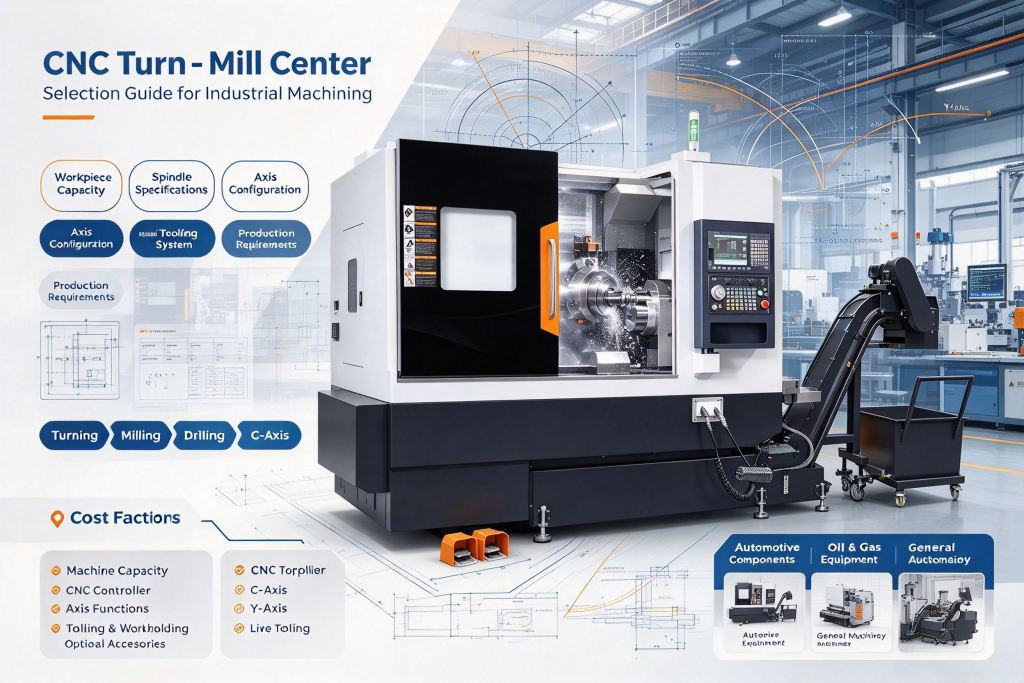
Before selecting a CNC turn-mill center, evaluate the following factors against your actual production requirements.
Workpiece Capacity
Check the maximum turning diameter, machining length, and workpiece weight. The effective machining envelope should accommodate the part’s complete geometry, including any features that require milling or drilling.
For long shafts or components with multiple diameters, consider workpiece support, clamping arrangements, and the space required for the complete machining process.
Spindle Specifications
Spindle power, speed range, and spindle bore influence the machine’s suitability for different materials, cutting operations, and bar-stock dimensions.
For example, applications involving large-diameter bar stock may require a suitable spindle bore, while demanding cutting operations may require a spindle configuration matched to the material and cutting parameters.
Axis Configuration and Live Tooling
Not every CNC lathe supports the same range of machining operations. Before purchasing a turn-mill machine, confirm whether the proposed configuration includes the functions your parts require.
- C-axis: Supports controlled spindle positioning for suitable milling and drilling operations.
- Y-axis: Can enable off-center machining and additional milling operations, depending on the machine design.
- Live tooling: Allows compatible rotating tools to perform operations such as milling and drilling.
- Additional axes or sub-spindle: May be relevant for more complex parts, depending on the production process.
These features should be selected according to the part drawing and required operations rather than included automatically.
Tooling and Workholding
Review turret capacity, tool interfaces, live-tooling compatibility, chuck specifications, and fixture requirements. The tooling system must support the required operations while providing appropriate access to the workpiece.
Also consider chip removal, tool changes, and workpiece loading when evaluating the complete machining setup.
Production Requirements
Part complexity, batch size, dimensional tolerances, and expected cycle time all affect machine selection.
For repeat production, evaluate setup consistency, process repeatability, and opportunities to reduce handling between operations. For lower-volume production, flexibility and ease of setup may be equally important.
The objective is to choose a configuration that matches the actual machining process without paying for unnecessary functions.
2. GTY Series Model Selection
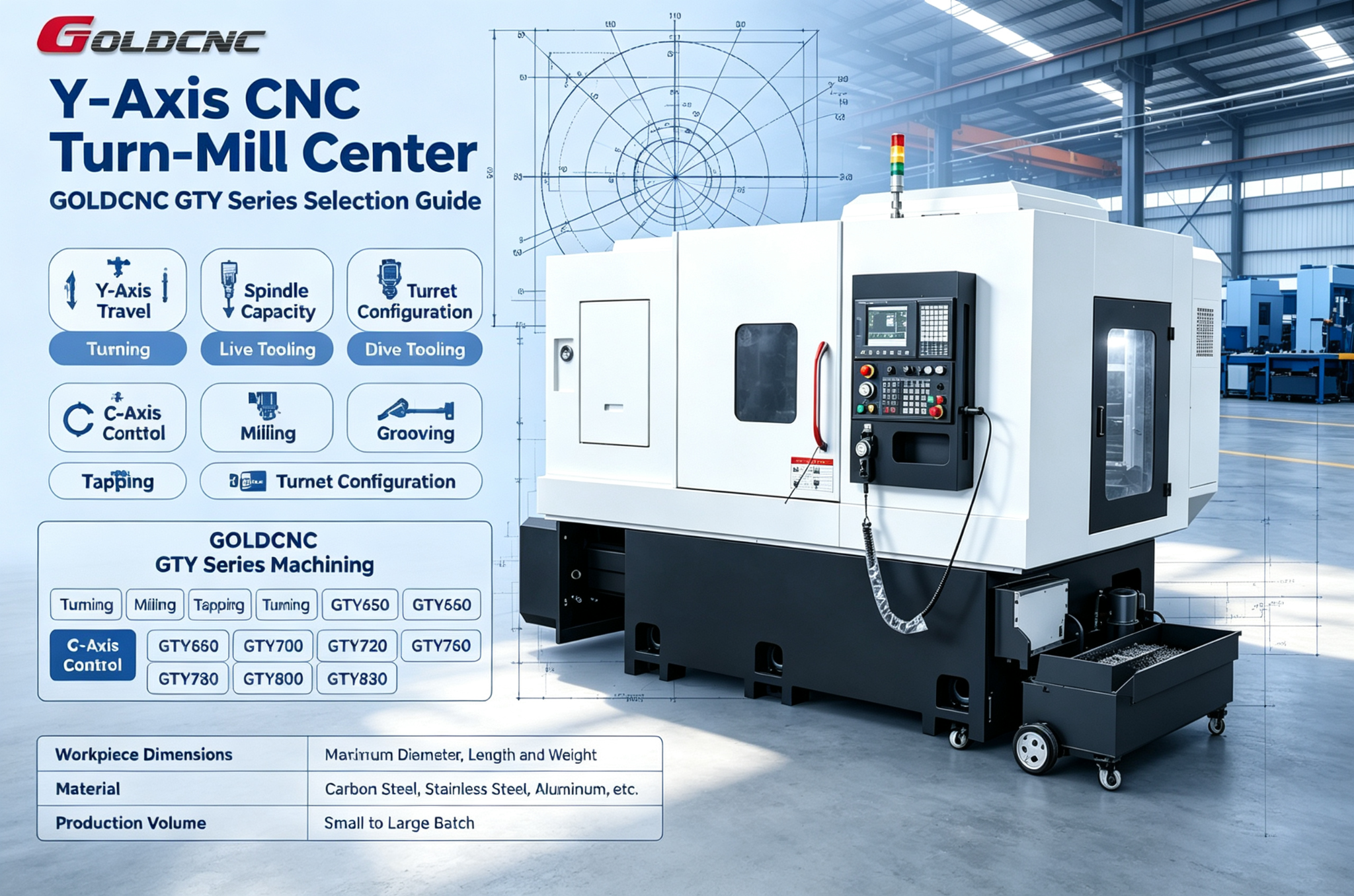
The proposed GOLDCNC GTY model range includes GTY650, GTY660, GTY700, GTY720, GTY760, GTY780, GTY800, and GTY830.
When comparing these models, buyers should review the corresponding technical documentation rather than relying on model designations alone.
Key specifications to confirm include:
- Effective machining diameter and maximum machining length
- Spindle bore, spindle speed, and spindle power
- Chuck specifications and workpiece clamping requirements
- Machine structure and available working envelope
- Turret type, tool capacity, and tool compatibility
- C-axis, Y-axis, and live-tooling availability
- CNC controller and optional equipment
Important: The GTY model names alone do not establish whether a machine supports combined turning and milling. Confirm the exact model configuration and available functions with the manufacturer before selecting a machine for turn-mill applications.
For a broader overview of available turning equipment, see the GOLDCNC CNC lathe machine range.
3. Industrial Applications and Machining Examples
A CNC turn-mill center may be suitable for a range of industrial components, depending on the workpiece geometry, required operations, tooling, and machine configuration.
Automotive Components
Typical parts: Shafts, hubs, bushings, and selected transmission components.
Representative machining scenario: Turn a shaft to the specified diameter and length, then machine a keyway or cross-hole if the selected machine configuration supports the required operation.
Key considerations: Material, dimensional tolerances, workholding, production volume, and cycle time.
Oil, Gas, and Energy Equipment
Typical parts: Valve stems, sleeves, fittings, and other rotational components.
Representative machining scenario: Perform external turning, internal boring, facing, or threading according to the component drawing. Additional milling or drilling may be possible when the required functions are available.
Key considerations: Material machinability, workpiece dimensions, thread specifications, cutting stability, and tooling requirements.
General Machinery and Automation
Typical parts: Roller shafts, pins, bushings, and mechanical joints.
Representative machining scenario: Turn cylindrical features and add compatible milled surfaces or drilled holes when supported by the machine configuration.
Key considerations: Part geometry, repeatability requirements, setup time, and batch size.
These examples describe typical machining scenarios rather than verified GOLDCNC customer results. Actual machining capability depends on the selected machine, tooling, fixtures, workholding, and process conditions.
4. What Affects the Cost of a CNC Turn-Mill Center?
The cost of a CNC turn-mill center depends on its specifications, configuration, and intended production application. When comparing quotations from different CNC turn-mill center manufacturers, consider the following factors.
Machine Capacity and Structure
The machining envelope, workpiece capacity, and machine structure should match the size and requirements of the parts being produced.
CNC Controller and Spindle Configuration
Controller selection, spindle specifications, and available control functions can affect the machine’s suitability for different machining processes.
Axis Configuration and Live Tooling
C-axis control, Y-axis travel, live tooling, and other optional functions should be evaluated against the operations required by the part drawing.
Tooling, Workholding, and Accessories
Turrets, toolholders, chucks, fixtures, chip-handling equipment, and automation options can affect the overall investment.
Packaging, Shipping, and After-Sales Arrangements
When comparing quotations, clarify packaging, shipping terms, installation requirements, training arrangements, and the scope of after-sales support.
A useful comparison should cover the complete proposed configuration—not just the base machine price. Ask each supplier to identify included equipment, optional items, and any configuration differences.
5. How to Evaluate a Turn-Mill Machine Manufacturer
Choosing a suitable turn-mill machine manufacturer requires more than comparing product descriptions and quotations.
Review Technical Documentation
Check whether the manufacturer can provide clear specifications for the proposed model, including machining capacity, spindle configuration, tooling, axis functions, and optional equipment.
Confirm Configuration Availability
Ask which functions are standard and which require additional configuration. In particular, verify the availability of C-axis control, Y-axis travel, and live tooling if your production process requires them.
Evaluate Application Suitability
Provide a representative part drawing and identify the required turning, milling, drilling, and threading operations. This helps establish whether the proposed machine configuration is appropriate.
Compare the Complete Quotation
Review the machine configuration, included accessories, tooling requirements, delivery terms, and after-sales arrangements together. A clear specification comparison helps reduce misunderstandings during purchasing.
Before requesting a quotation, prepare your workpiece drawing, material specification, maximum dimensions, required machining operations, and estimated production volume.
6. Request a CNC Turn-Mill Center Quotation
Looking for a CNC turning or turn-mill solution for your production line?
Contact GOLDCNC with your part drawing and machining requirements. Our team can help review the application, clarify available configurations, and confirm the relevant technical specifications.
Contact GOLDCNC to discuss a machining solution suited to your production requirements.
