

Dimensional errors, poor surface finish, and inconsistent batch quality can increase production costs. A reliable Vertical Machining Center (VMC) provides a foundation for precision milling, but actual results also depend on tooling, workholding, cutting parameters, and thermal stability.
Choose a Rigid Machine Structure
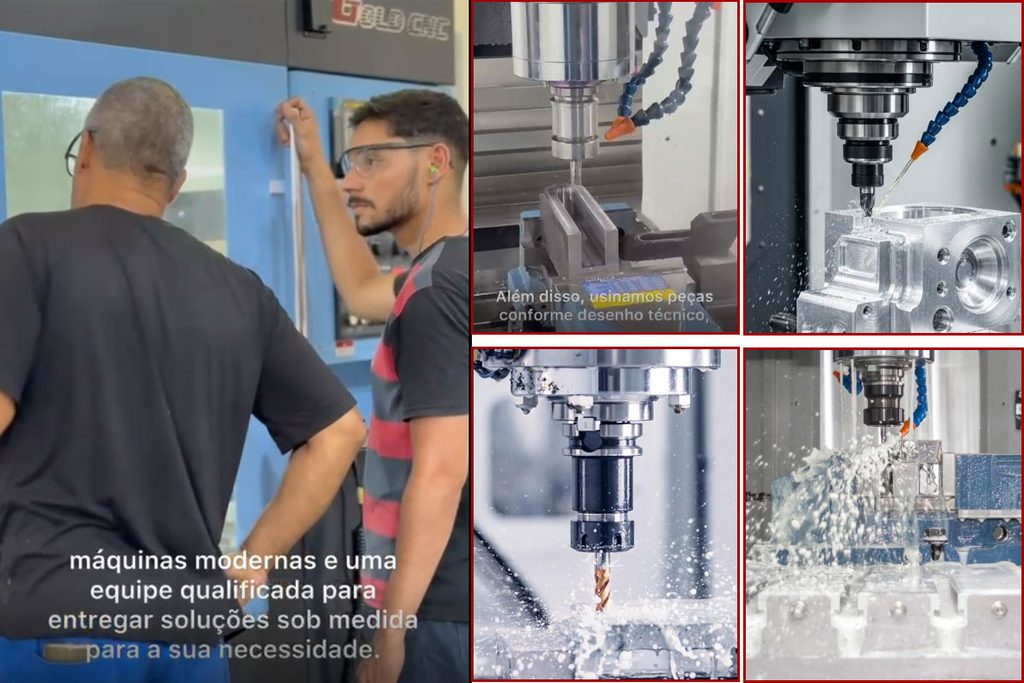
Machine rigidity helps control vibration and tool deflection during cutting. GOLDCNC VMC850 features a rigid cast-iron structure and linear guideways, supporting stable machining of components used in machinery, automotive parts, and mold manufacturing.
Match Machine Travel to Your Workpiece
The VMC850 has a 1000 × 500 mm worktable and X/Y/Z travel of 800/500/500 mm. For larger components, the VMC1160 provides a 1200 × 600 mm worktable and 1100/600/600 mm travel.
Selecting suitable travel and worktable capacity helps provide adequate space for workholding and reduces setup limitations.
Improve Workpiece Clamping and Positioning
Poor workholding is a common cause of machining errors. A workpiece that moves during cutting may develop inaccurate hole positions, uneven surfaces, or dimensional variations between batches.
Select fixtures according to the component geometry, cutting forces, and required tolerances. Use reliable locating references, keep contact surfaces clean, and apply appropriate clamping force. Excessive clamping can deform thin-walled parts, while insufficient clamping may cause movement or vibration.
For repeat production, consistent positioning helps reduce setup errors and improve part-to-part repeatability.
Control Heat and Tool Wear
Heat generated by spindle operation and cutting can cause dimensional drift during long machining cycles. Tool wear can also gradually change hole sizes, pocket dimensions, and surface quality.
Allow the machine to warm up when required by the application, maintain suitable coolant conditions, and inspect critical dimensions throughout production. Replace worn tools before they cause unacceptable deviations.
For precision components, first-article inspection and regular sampling can identify problems before a large batch is affected.
Choose the Right Vertical Machining Center for Your Application
When selecting a vertical machining center, buyers should evaluate more than spindle speed or machine price. Worktable dimensions, X/Y/Z-axis travel, spindle specifications, tool capacity, machine rigidity, and the intended workpiece material all affect machining performance.
For example, mold manufacturing may require good contour accuracy and reliable finishing performance, while general machinery production may prioritize versatility, stable cutting, and efficient batch processing.
Before purchasing, provide the machine supplier with representative drawings, workpiece dimensions, materials, and tolerance requirements. This helps determine whether the proposed machine configuration is suitable for actual production conditions.
Improving machining accuracy with a vertical machining center requires coordinated control of the machine, tooling, workholding, cutting process, and inspection routine. A suitable VMC configuration combined with a well-planned machining process can help manufacturers reduce rework, improve surface quality, and achieve more consistent production results.
GOLDCNC offers VMC models for different workpiece sizes and machining requirements. The VMC850 is suitable for many small and medium-sized components, while the VMC1160 provides greater axis travel for larger parts.
Contact GOLDCNC with your workpiece drawings, material, required tolerances, and production volume to discuss a suitable machine configuration.
