
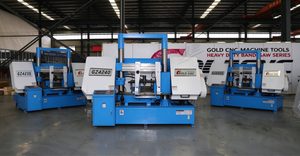

A Turn Mill Machine is designed for parts that combine turning and milling operations within the same manufacturing process.
Instead of treating turning and milling as completely separate operations, a CNC turn-mill machine can integrate multiple machining processes around the same workpiece.
This becomes particularly valuable when the component contains both rotational features and additional milling features that are difficult or inefficient to complete through separate machines.
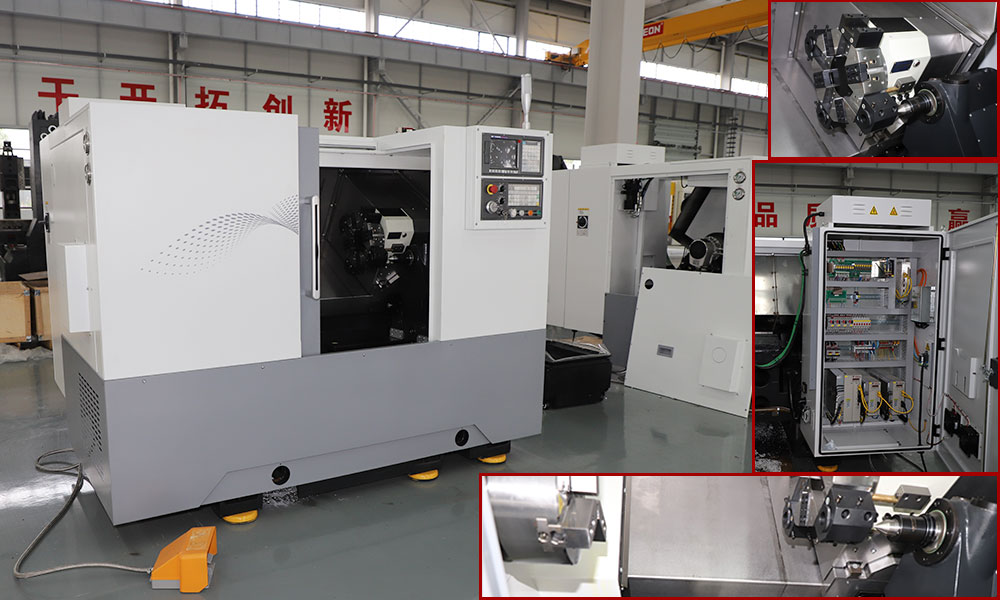
What Type of Parts Benefit From Turn-Mill Machining?
Turn-mill technology is most useful when a component has both rotational and non-rotational features.
Typical examples include:
- Shafts with milled flats
- Flanged shafts
- Valve components
- Hydraulic components
- Pump components
- Connectors
- Couplings
- Complex rotational parts
- Components with radial holes
- Parts with off-center features
For a simple round shaft requiring only turning, a conventional CNC lathe may be sufficient.
The value of turn-mill machining becomes clearer when milling operations are added to the same component.
Why Combine Turning and Milling?
Consider a component that requires:
- Turning an outside diameter
- Facing an end
- Cutting a thread
- Drilling a radial hole
- Milling a flat
- Creating a keyway
With separate machines, the part may need to move between a lathe and a milling machine.
Each transfer creates additional requirements for:
- Workholding
- Part positioning
- Setup
- Inspection
- Material handling
Okuma describes this type of problem in its machining discussion: parts that combine turning and milling features can require additional setup and workholding when the processes are separated.
Turn-Mill Machine for Shafts With Milling Features
A shaft may appear to be a turning component, but additional features can change the manufacturing process.
Examples include:
- Keyways
- Flats
- Cross holes
- Radial slots
- Bolt patterns
- Off-center holes
- Polygonal features
If these operations can be completed without removing the workpiece from the main setup, the production process can become more integrated.
Turn-Mill Machine for Flanged Components
Flanged components are another common application.
A part may require:
- Outer diameter turning
- Face machining
- Internal boring
- Bolt-hole drilling
- Radial milling
- Threading
The challenge is often not the individual operations.
The challenge is maintaining a consistent relationship between them.
A combined machining process can reduce unnecessary repositioning between separate machines.
Turn-Mill for Valve and Hydraulic Components
Valve bodies, hydraulic components, and fluid-control parts often contain a combination of:
- Cylindrical surfaces
- Threads
- Sealing faces
- Cross holes
- Mounting features
- Internal bores
Depending on the geometry, a turn-mill machine can integrate several of these operations into a coordinated process.
This can be especially useful when the relative position between turned and milled features is important.
The greatest potential benefit appears when multiple operations share the same datum or centerline.
For example:
Turning → Facing → Drilling → Milling → Threading
can potentially be programmed as one integrated process rather than moving the component between different machines.
Fewer transfers can mean fewer opportunities for:
- Setup variation
- Incorrect orientation
- Re-clamping errors
- Additional inspection
- Manual handling
However, the exact benefit depends on the part geometry and machine configuration.
Turn-Mill Machine for Small-Batch and High-Mix Production
Turn-mill equipment can be attractive for manufacturers producing complex parts in relatively small or medium quantities.
In this environment, building a dedicated process line may not make sense.
A multifunction machine can provide flexibility for different component families.
Typical users may include:
- Precision component manufacturers
- Hydraulic equipment suppliers
- Pump manufacturers
- Valve manufacturers
- Machinery component suppliers
- Custom CNC machining companies
GOLDCNC’s product range includes CNC lathes and CNC turn-mill machines for components requiring different combinations of turning and milling operations.
